
How Hierarchical Clustering Builds a Portfolio
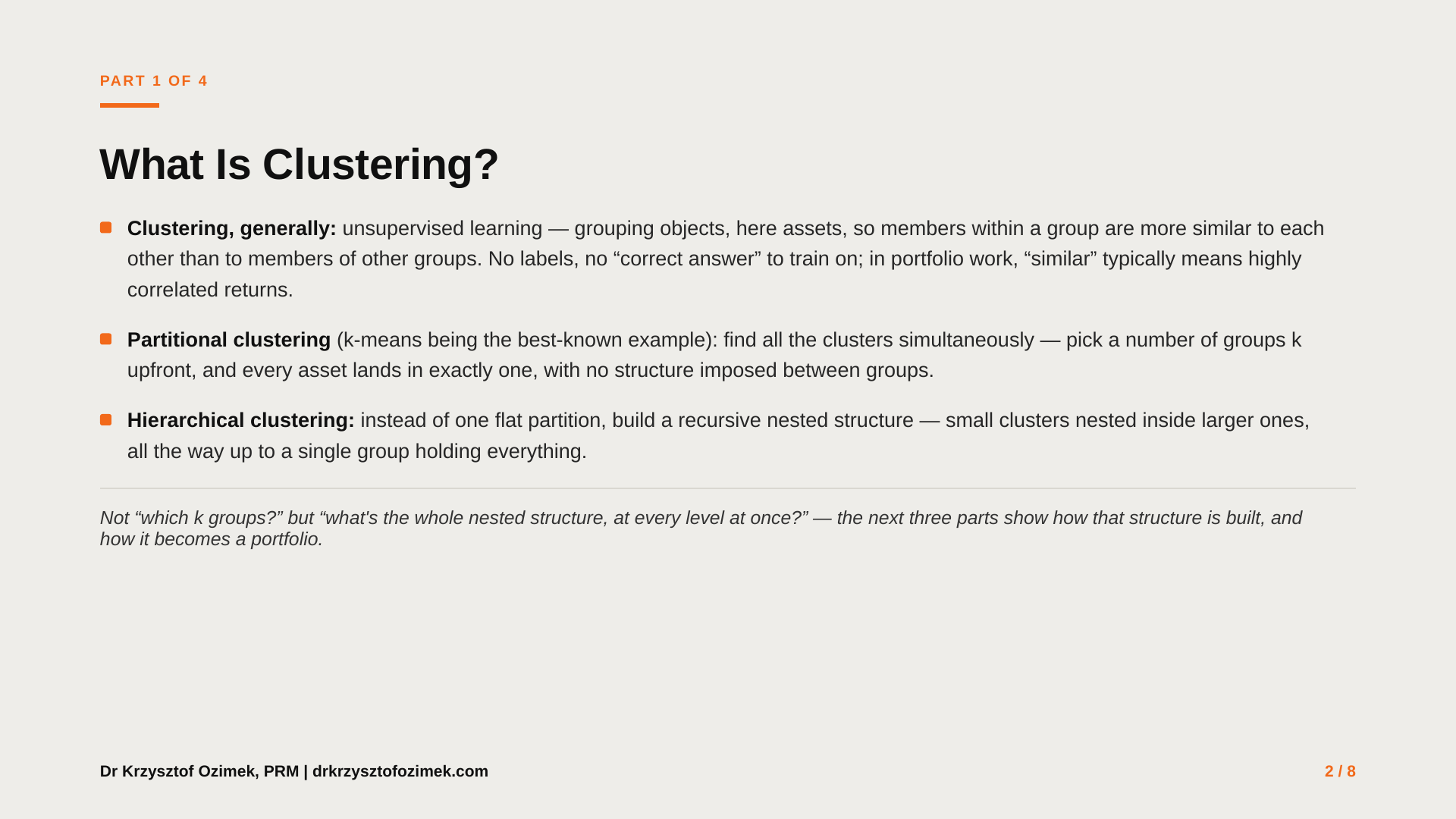
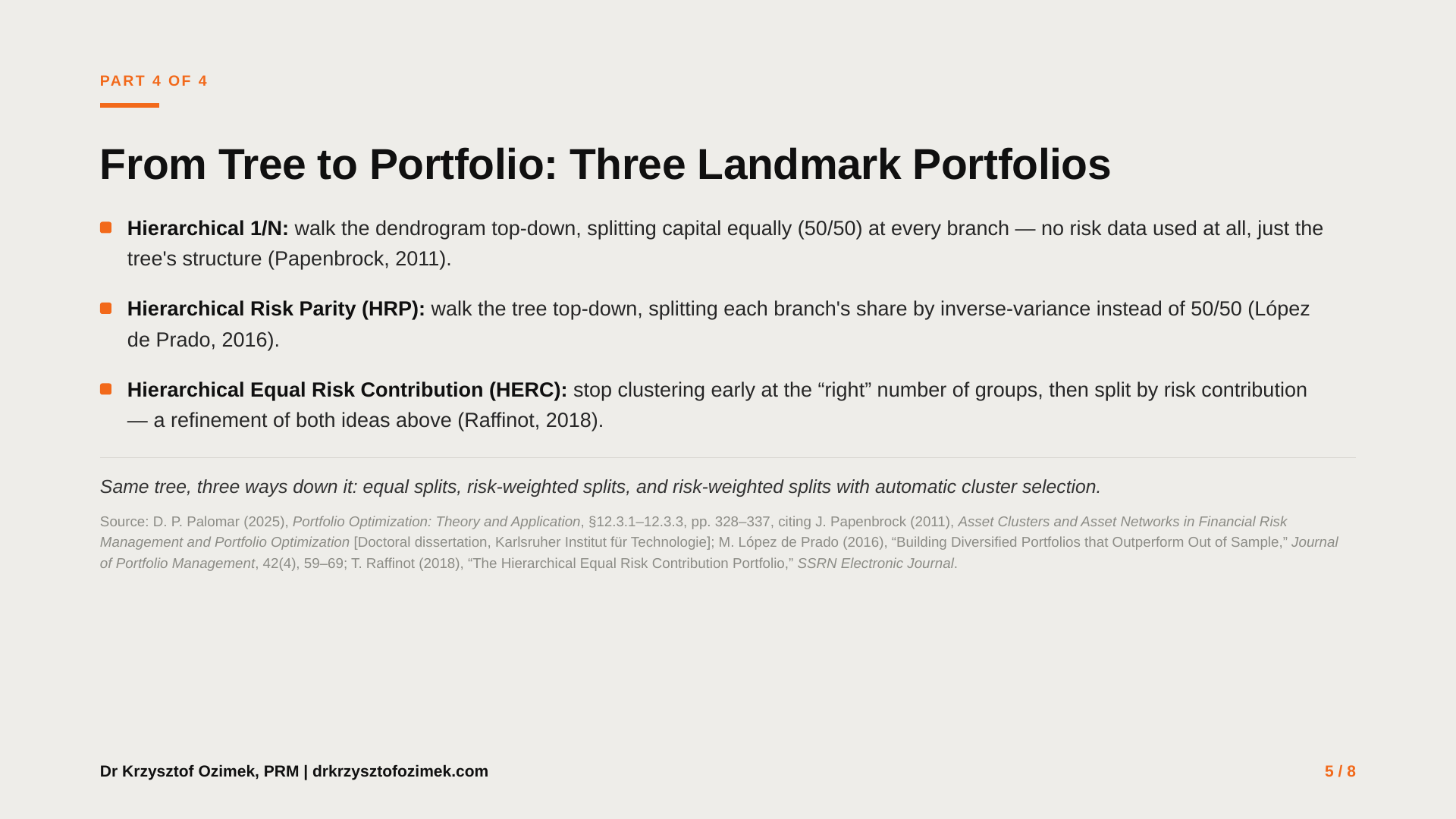

A correlation matrix treats every asset pair as an equally plausible substitute for another. That lack of structure is a big part of why naive diversification concentrates risk in ways that aren't obvious until it's too late.
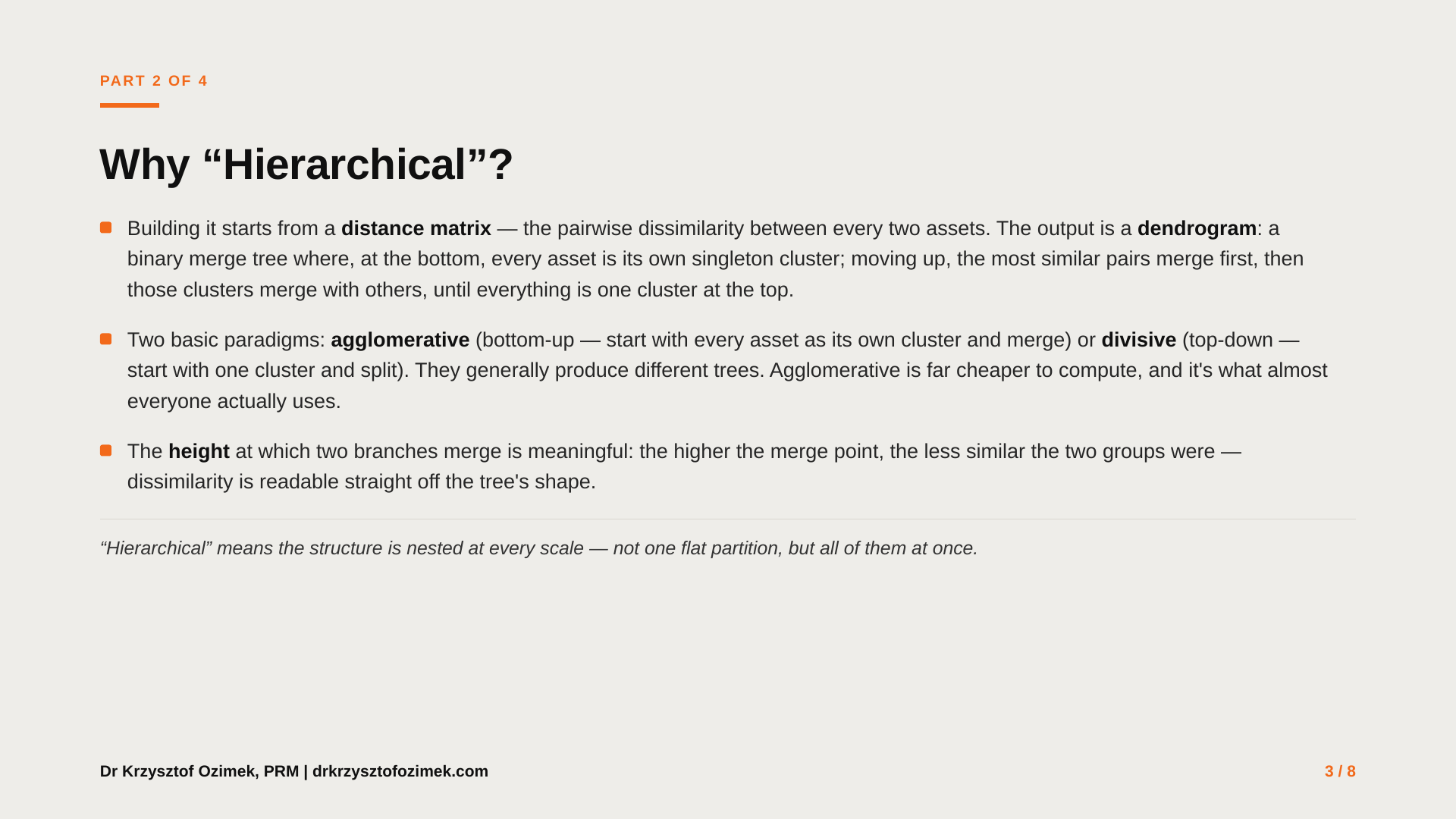
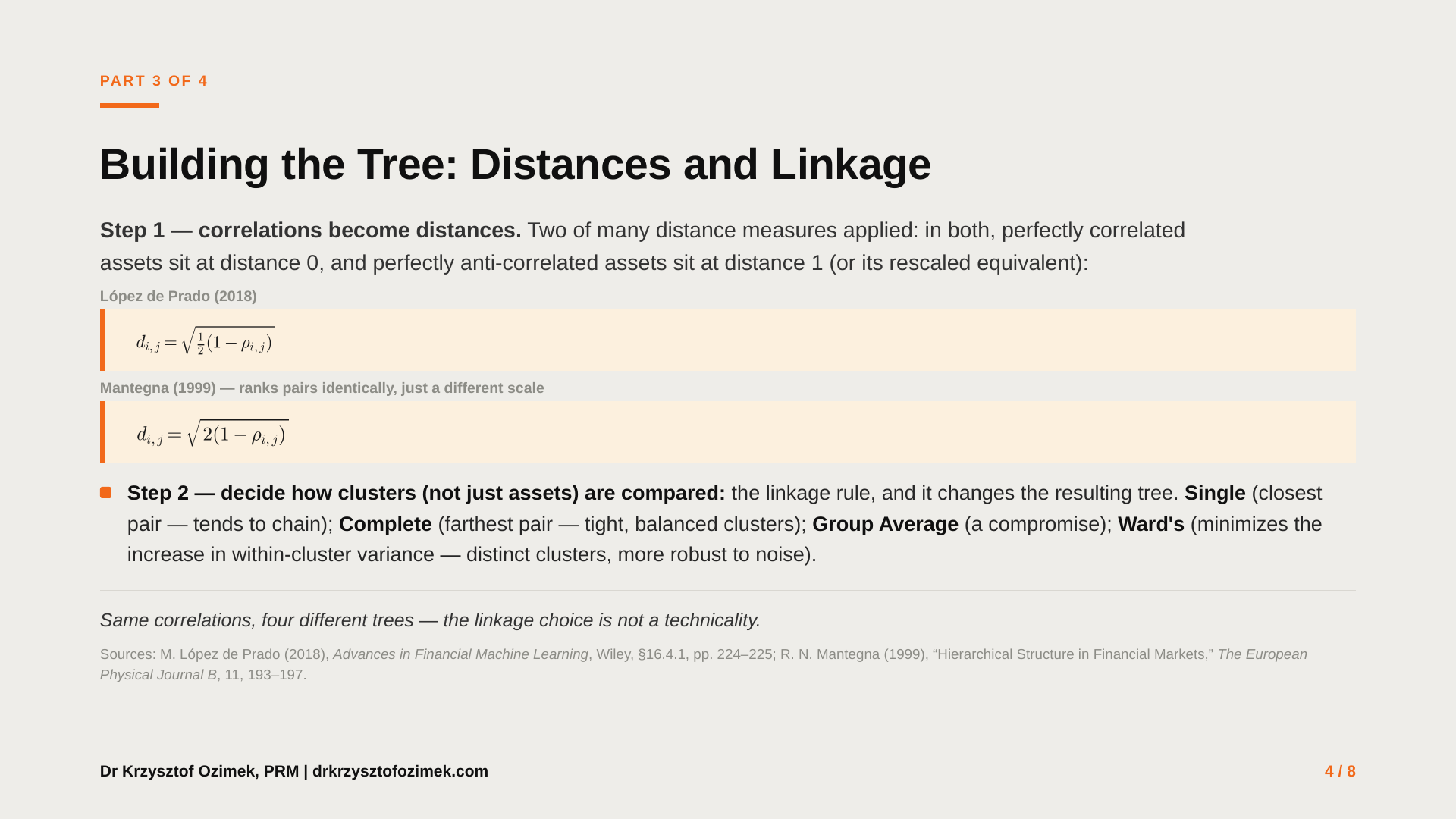
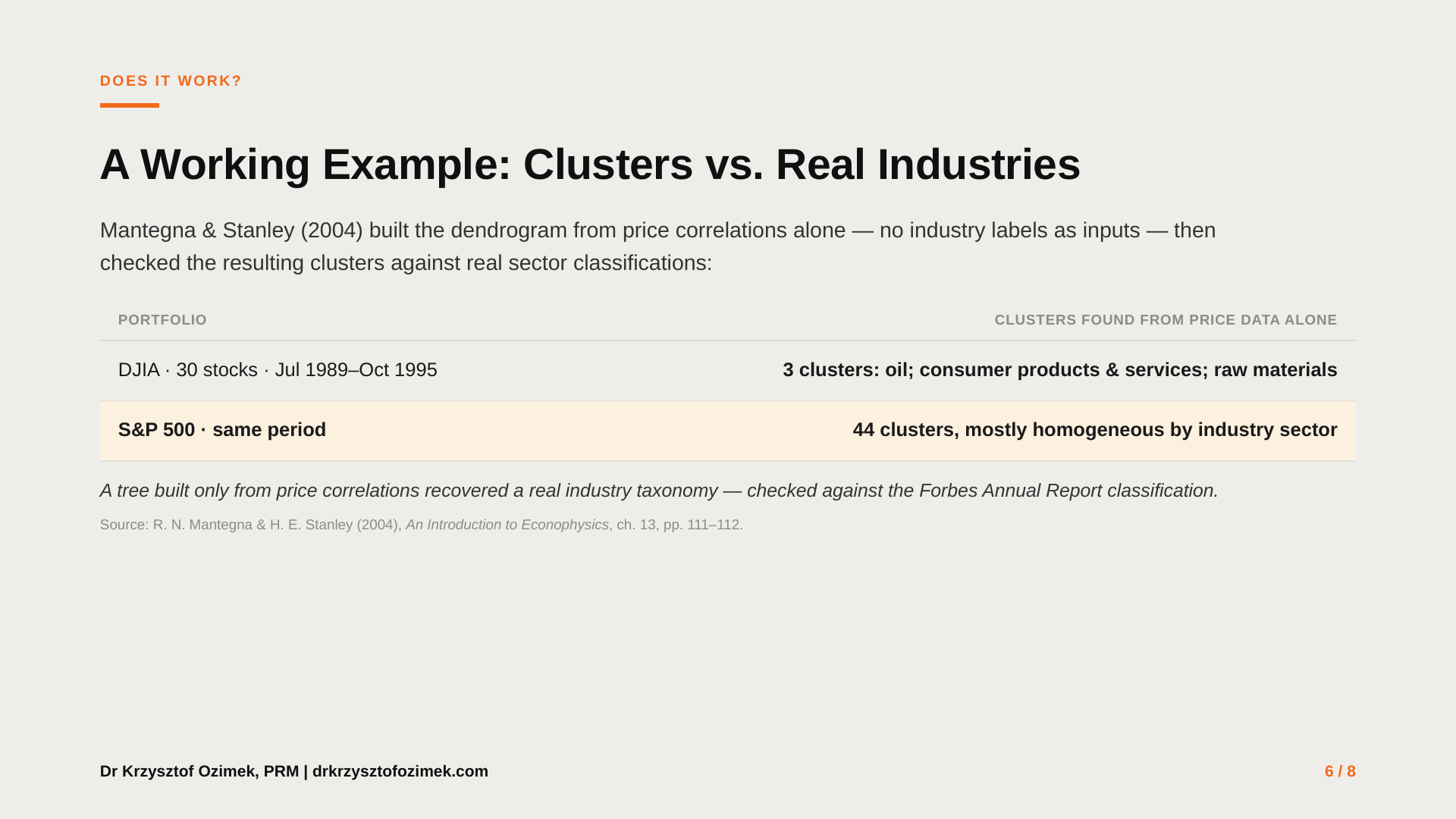
Swipe through a primer on hierarchical clustering: what it is, why it's called "hierarchical," how the dendrogram gets built, and three landmark ways to turn that tree into portfolio weights — plus a real-world check that it actually recovers true industry structure.
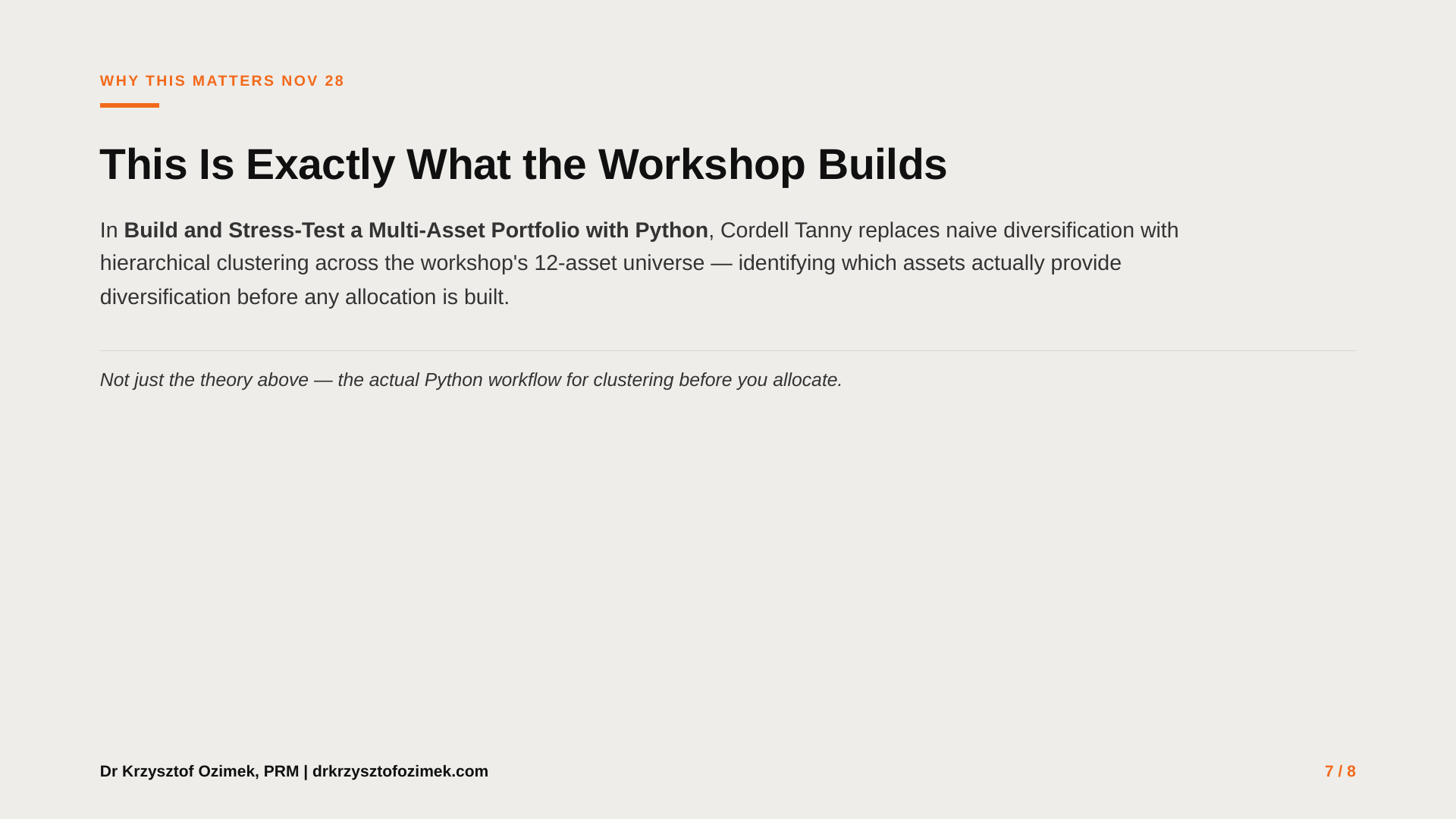
This is the second of three short posts I'm sharing ahead of Build and Stress-Test a Multi-Asset Portfolio with Python, a hands-on online workshop with Cordell Tanny, CFA, FRM, FDP on Saturday, November 28, 2026 — where hierarchical clustering is used to replace naive diversification across the workshop's 12-asset universe.
Full details and registration: https://luma.com/e0iytryu?coupon=OZIMEK40&utm_source=expert
Next up in this series: the Johnson SU distribution — and a review after the workshop.
Disclosure: I received a complimentary ticket to this event from Packt Publishing. The views above are my own.

Related methodological resources
Continue Exploring Quantitative Finance Methodology
Explore PDF textbooks, implementation-oriented bundles, and methodological frameworks in quantitative investing, trading research, and scientific backtesting.
Explore PDF Textbooks & Bundles