Skip to content
Cropped version of the official logo of Dr Krzysztof Ozimek, representing quantitative finance education and research.
  • About
  • Events
  • Blog
  • Books
  • Algorithmic Trading Models
  • QuantFin Services
  • Contact
Edu Hub
Cropped version of the official logo of Dr Krzysztof Ozimek, representing quantitative finance education and research.
Dr Krzysztof Ozimek
Edu Hub
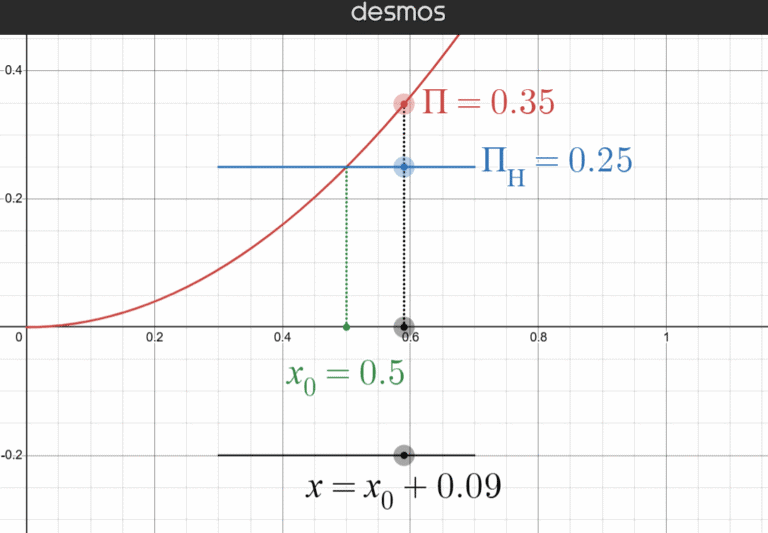
  • Graph illustrating hedged versus unhedged portfolio values as a risk factor changes, highlighting the effectiveness of numerical hedging.
    Quantitative Finance

    Numerical Hedging of Portfolio Risk via Approximated Derivatives

    Dr Krzysztof Ozimek, a Quantitative Investment & Trading Research EducatorDr Krzysztof Ozimek

    This post presents a conceptual method for constructing hedging strategies using numerical approximations of derivatives with respect to tradable risk factors. Focusing on a selected factor, we show how first- and second-order sensitivities of portfolio value can be estimated from models or data-driven sources. These are then used to build hedges that neutralize both linear and curvature risk, enabling robust, model-agnostic risk management.
    Read More Numerical Hedging of Portfolio Risk via Approximated DerivativesContinue

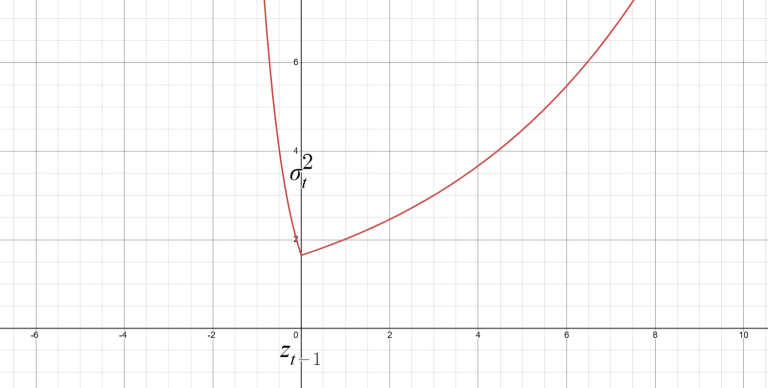
  • EGARCH(1,1) conditional variance response to positive and negative shocks — leverage effect visualization
    Quantitative Finance

    Modeling Asymmetric Volatility with EGARCH

    Dr Krzysztof Ozimek, a Quantitative Investment & Trading Research EducatorDr Krzysztof Ozimek

    This post presents an accessible introduction to the Exponential GARCH (EGARCH) model—a widely used tool in financial econometrics for modeling time-varying volatility in asset returns. Unlike standard GARCH models, EGARCH captures both volatility clustering and the leverage effect, whereby negative shocks tend to increase future volatility more than positive shocks of equal magnitude. The post demonstrates how EGARCH achieves this using a simplified form, with an emphasis on the asymmetry function’s role in shaping variance dynamics. The dynamic visualization of EGARCH volatility asymmetry presented in this post was created by the author using Desmos.

    Read More Modeling Asymmetric Volatility with EGARCHContinue

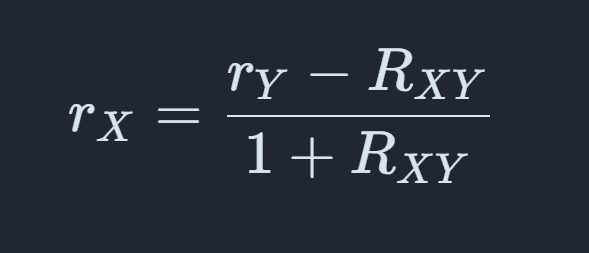
  • Final formula for calculating investment return in domestic currency, adjusting for foreign asset return and exchange rate change
    Quantitative Finance

    Calculating the Return on Investment in Currency X When Investing in Currency Y

    Dr Krzysztof Ozimek, a Quantitative Investment & Trading Research EducatorDr Krzysztof Ozimek

    This post presents a method for calculating the return on an investment denominated in a base currency X, when the actual investment is made in a foreign currency Y. The approach considers both the performance of the asset in Y and the movement of the exchange rate between X and Y. A general formula is derived and explained in detail, along with a simplified approximation for practical use. The analysis also accommodates trade costs, taxes, and inflation. Several scenarios are discussed to illustrate how currency appreciation or depreciation affects investment returns. A numerical example is provided, alongside R and Python implementations of the calculation.

    Read More Calculating the Return on Investment in Currency X When Investing in Currency YContinue

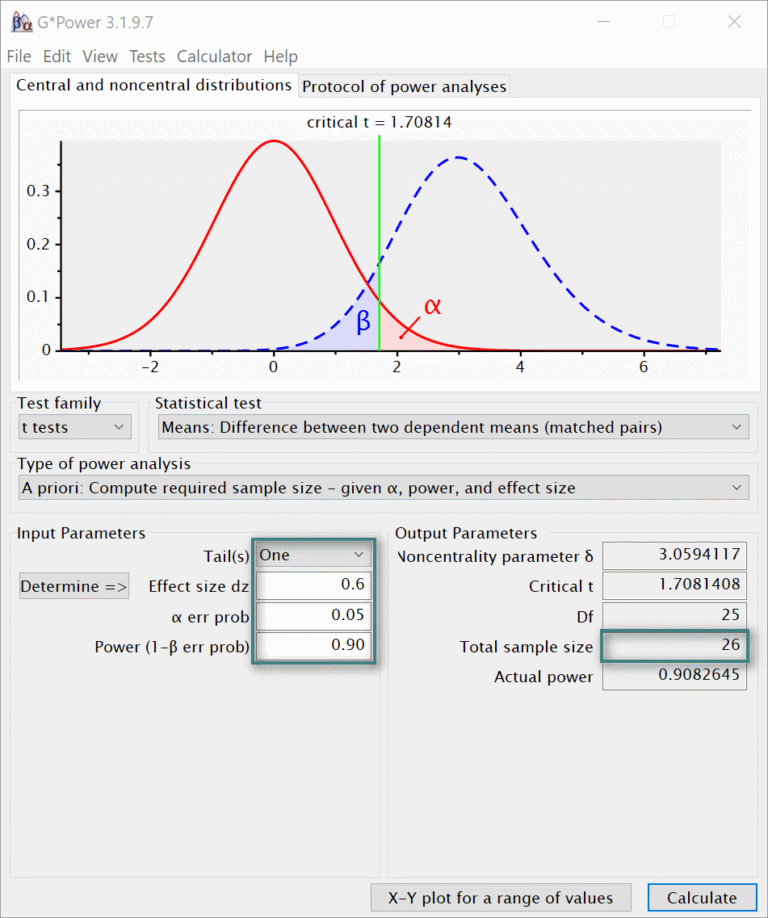
  • Screenshot of G*Power 3.1.9.7 software showing a power analysis setup for a one-tailed paired-sample t-test with an effect size of 0.6, α = 0.05, and power = 0.90, resulting in a required total sample size of 26.
    Quantitative Finance

    Development of Investment or Trading Strategies with G*Power-like Functionalities

    Dr Krzysztof Ozimek, a Quantitative Investment & Trading Research EducatorDr Krzysztof Ozimek

    This post explains how G*Power, a tool for statistical power analysis, can be applied to evaluate investment or trading strategies — especially to determine how many observations are needed to detect meaningful performance (e.g., a substantially positive Information Ratio). It demonstrates using a paired-sample t-test in G*Power and replicates the calculation in R and Python, showing how to compute the required sample size to ensure robust strategy validation before deployment.

    Read More Development of Investment or Trading Strategies with G*Power-like FunctionalitiesContinue

Disclaimer

All content made available through drkrzysztofozimek.com, including but not limited to digital products, courses, textbooks, articles, and newsletters, is provided for educational purposes only.

We do not provide financial, investment, or trading advice. The information is not intended as a recommendation or solicitation to buy, sell, or hold any financial instrument. You acknowledge that you use the information provided at your own risk.

Eduinn Krzysztof Ozimek shall not be held liable for any loss, damage, or consequences resulting directly or indirectly from reliance on such information.

Eduinn Krzysztof Ozimek

ul. Kryształowa 31/21
01-356 Warsaw
Poland

NIP 526 225 97 76

Telephone: +48 796 594 098
E-mail: contact@drkrzysztofozimek.com

Quantocracy featured quant finance blog badge

  • Terms
  • Privacy Policy
  • Cookie Policy (EU)
  • Contact
  • About
  • Blog
  • Edu Hub
  • Multi-Method VaRCalc
  • Algorithmic Trading Models
  • Events
  • QuantFin Services

Research

SSRN
arXiv
ORCID

© 2026 Dr Krzysztof Ozimek

Linkedin Facebook YouTube Twitter
Manage Consent
To provide the best experiences, we use technologies like cookies to store and/or access device information. Consenting to these technologies will allow us to process data such as browsing behavior or unique IDs on this site. Not consenting or withdrawing consent, may adversely affect certain features and functions.
Functional Always active
The technical storage or access is strictly necessary for the legitimate purpose of enabling the use of a specific service explicitly requested by the subscriber or user, or for the sole purpose of carrying out the transmission of a communication over an electronic communications network.
Preferences
The technical storage or access is necessary for the legitimate purpose of storing preferences that are not requested by the subscriber or user.
Statistics
The technical storage or access that is used exclusively for statistical purposes. The technical storage or access that is used exclusively for anonymous statistical purposes. Without a subpoena, voluntary compliance on the part of your Internet Service Provider, or additional records from a third party, information stored or retrieved for this purpose alone cannot usually be used to identify you.
Marketing
The technical storage or access is required to create user profiles to send advertising, or to track the user on a website or across several websites for similar marketing purposes.
  • Manage options
  • Manage services
  • Manage {vendor_count} vendors
  • Read more about these purposes
View preferences
  • {title}
  • {title}
  • {title}
  • About
  • Events
  • Blog
  • Books
  • Algorithmic Trading Models
  • QuantFin Services
  • Contact
Search